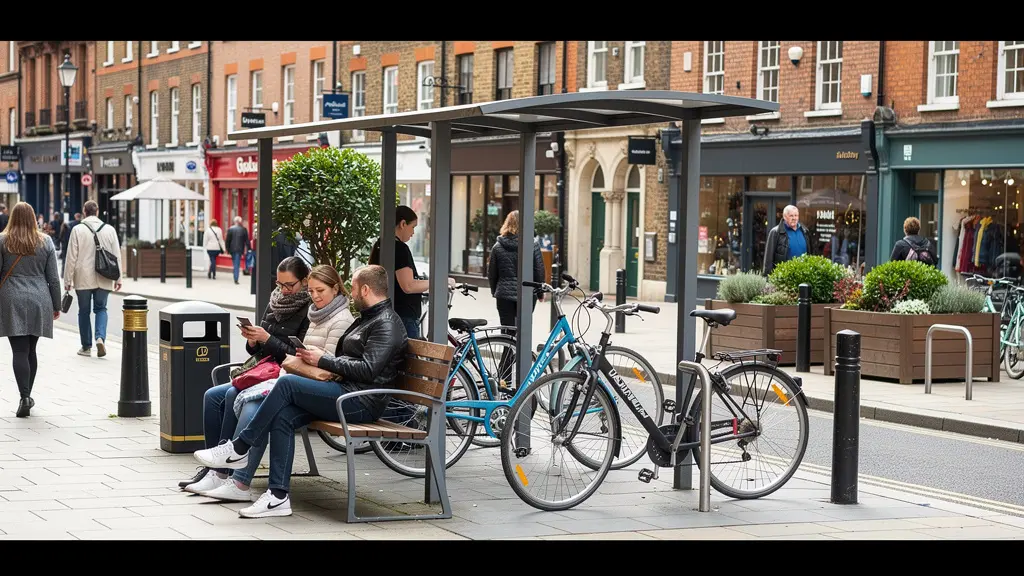
What this guide covers
Street furniture essentials in 30 seconds
- Street furniture directly impacts footfall, safety and resident satisfaction scores
- Five categories matter most: safety infrastructure, seating, shelter, waste management, cycling facilities
- UK accessibility compliance under the Equality Act 2010 is legally required, not optional
- Quality installations deliver decades of service when properly specified
What street furniture actually delivers for urban liveability
I have reviewed dozens of public realm projects over the years. The pattern is consistent. Towns that invest strategically in street furniture see measurable improvements in how residents rate their high streets. Towns that treat it as an afterthought wonder why footfall keeps declining.
£10.59 billion
Global urban street furniture market size in 2025
According to Precedence Research’s 2025 market analysis, the global urban street furniture market reached USD 10.59 billion in 2025, projected to grow at 3.7% annually through 2034. That scale of investment reflects something councils worldwide have learned: this infrastructure pays back.
The connection is straightforward. Benches give elderly residents and parents with young children somewhere to rest. Cycle parking encourages sustainable transport. Waste bins prevent the litter accumulation that signals neglect. Shelters make public transport viable in British weather. Remove any element and the public realm degrades.
A 2025 UK footfall study analysing data from 960 counters across the country identified pedestrian ways and retail amenities as critical drivers of urban vitality. Street furniture enables both. Without seating, people pass through rather than dwell. Without cycling facilities, sustainable access becomes impractical.
Case: Market town regeneration gone wrong
I advised a medium-sized town council in the Midlands on their high street regeneration. Their initial approach was piecemeal: benches from one supplier, bins from another, shelters added as an afterthought. The result created accessibility gaps that required correction within 18 months. A coordinated strategy from the start would have cost 30% less.
The cost of inaction compounds. Tired-looking streets drive footfall to out-of-town retail parks. Reduced footfall hits local businesses. Declining business rates reduce council revenues. It becomes a downward spiral.
The five categories that transform public spaces
When advising planners, I find most want to know where to start. My answer is always the same: focus on the five categories that address 80% of public realm challenges. Everything else is refinement.
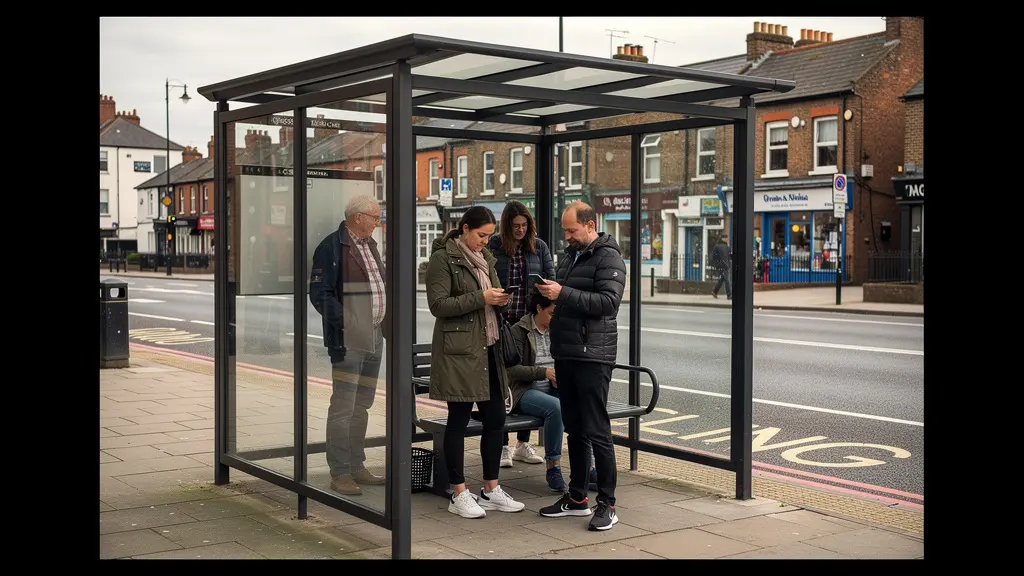
The UK government recognises cycling and walking infrastructure as strategic priorities. According to the government’s third cycling investment strategy, £616 million in capital funding has been committed to Active Travel England from 2026 to 2030, with plans to create over 3,500 miles of safer routes. Bicycle shelters and cycle parking are essential components of this infrastructure.
When sourcing street furniture for urban public spaces, the selection should address specific local challenges rather than follow a generic specification. The comparison below maps furniture categories to the problems they solve.
| Category | Primary Challenge Addressed | Key Products |
|---|---|---|
| Safety infrastructure | Vehicle-pedestrian conflicts, traffic calming | Bollards, barriers, guardrails, traffic mirrors |
| Seating | Dwell time, accessibility for mobility-impaired | Benches, perch seating, accessible seating with armrests |
| Shelter | Weather protection, public transport viability | Bus shelters, covered waiting areas |
| Waste management | Litter, street cleanliness perception | Litter bins, recycling units, cigarette bins |
| Cycling facilities | Sustainable transport, secure parking | Bicycle shelters, cycle stands, repair stations |
The benches segment alone holds 30% of market share according to industry data. That reflects reality. Seating is the entry point for most public realm improvements.
Other elements—planters, information boards, decorative lighting—have their place. But I always recommend councils address these five fundamentals before aesthetic enhancements. Get the basics wrong and no amount of planting compensates.
Accessibility compliance: the non-negotiable foundation
Here is the uncomfortable truth. In my experience reviewing urban projects, the most common mistake is prioritising visual appeal over accessibility compliance. Councils select furniture that looks good in renders but fails basic mobility requirements. The result is costly retrofitting within 12-18 months when compliance issues surface.

The Equality Act 2010 regulations are explicit. Service providers must make reasonable adjustments including the removal, replacement or provision of furniture and equipment. This applies to public realm installations. Non-compliance creates legal exposure.
Compliance warning: Street furniture that obstructs wheelchair access or fails to meet mobility requirements can trigger Equality Act enforcement action. Design compliance in from the start—retrofitting costs significantly more.
The DfT inclusive mobility guidance provides specific requirements. Mobility impaired people need seating at reasonably frequent intervals. In commonly used pedestrian areas, seats should be provided at intervals of no more than 50 metres. Guardrails should be at least 1100mm high, preferably 1200mm.
Clear zones matter equally. According to Wakefield Council’s design code, highly urban areas require a minimum 3 metre clear zone. Furniture positioned to obstruct pedestrian, wheeling or cycle movement fails basic inclusive design principles.
Accessibility compliance checklist for street furniture
- Seating intervals no more than 50 metres in high-footfall areas
- Minimum 3 metre clear zone maintained in urban settings
- Benches include armrests for mobility-impaired users
- Tactile paving installed where furniture meets pedestrian routes
- Colour contrast sufficient for visual impairment (BS 8300 compliant)
Inclusive design benefits everyone. The parent with a pushchair, the elderly resident with shopping, the delivery driver with a trolley—all benefit from clear routes and thoughtful furniture placement. This is not about ticking compliance boxes. Genuinely accessible spaces work better for all users.
Your questions about street furniture investment
After working with councils on public realm projects, I hear the same questions repeatedly. Budget holders want reassurance before committing resources. These are the concerns that come up most often.
Common investment questions answered
How long does quality street furniture actually last?
Quality street furniture, properly maintained, delivers decades of service. Steel and cast iron bollards, galvanised and powder-coated, withstand UK weather conditions. Hardwood or recycled plastic benches resist rot and vandalism. The key is specifying materials appropriate to location—coastal areas need marine-grade finishes, high-footfall zones need impact-resistant construction.
What ongoing maintenance should councils budget for?
Maintenance requirements vary by product type. Bins need regular emptying and periodic deep cleaning. Benches require occasional refinishing—every 3-5 years for timber, less frequently for metal. Bollards are essentially fit-and-forget unless damaged. Budget around 2-3% of capital cost annually for routine maintenance across a mixed furniture portfolio.
How do we justify the investment to councillors?
Frame it around outcomes councillors care about. Resident satisfaction scores improve when public spaces feel cared for. Footfall data shows correlation between public realm quality and high street activity. Accessibility compliance reduces legal exposure. The cost of inaction—declining town centres, enforcement action—typically exceeds investment in getting it right.
Should we choose standard products or bespoke designs?
Standard products suit most applications and offer faster procurement, lower cost and proven durability. Bespoke design makes sense for heritage areas, landmark locations or where integration with local character justifies the premium. In my experience, councils that over-specify bespoke furniture often regret the extended lead times and replacement challenges.
The next step for your public realm
Street furniture decisions ripple through entire urban systems. The bench you specify affects who can use your high street. The bollard placement shapes traffic flow. The cycle parking provision influences transport choices for years ahead.
If you take one thing from this guide: start with accessibility. Get the foundations right—seating intervals, clear zones, inclusive design—and everything else follows more smoothly. I have seen too many projects require expensive corrections because compliance was treated as an afterthought.
Practical starting point: Audit your existing street furniture against the accessibility checklist above. Identify the gaps before specifying new installations. A clear baseline makes it far easier to prioritise investment and demonstrate progress to stakeholders.