
The UK street furniture market reached £664 million in 2024, with local authorities accounting for 77% of that spend according to Barbour ABI’s market analysis. That is serious public money. Yet distinguishing genuine professionals from glossy catalogues backed by nothing remains surprisingly difficult.
6 hallmarks of a professional street furniture supplier:
- In-house manufacturing with visible quality control
- Testing to BS EN standards with documentation
- Warranties of 10+ years on structural components
- Guaranteed spare parts availability for 15+ years
- Professional installation teams, not third-party contractors
- Named aftercare contacts, not generic call centres
What you will find in this guide
Manufacturing Control: The Foundation You Cannot Fake
When advising procurement teams, I consistently see the same blind spot. They compare catalogues. They compare prices. They rarely ask: who actually makes this? The distinction matters more than most specifications.
Professional suppliers typically manufacture in-house. Not always everything, but certainly their core product lines. This vertical integration gives them something catalogue resellers cannot offer: control. Control over materials. Control over tolerances. Control over what happens when you need something non-standard.
Why in-house manufacturing matters for your project: When a supplier controls production, they can adapt. Custom colours to match your borough branding. Modified dimensions for awkward spaces. Replacement parts decades later. Resellers depend on third parties who may discontinue lines without notice.
I remember visiting a manufacturer in the North West who showed me their welding bay. Every frame welded by certified fabricators, every joint documented. Compare that to imported products where you cannot even identify which factory produced them.
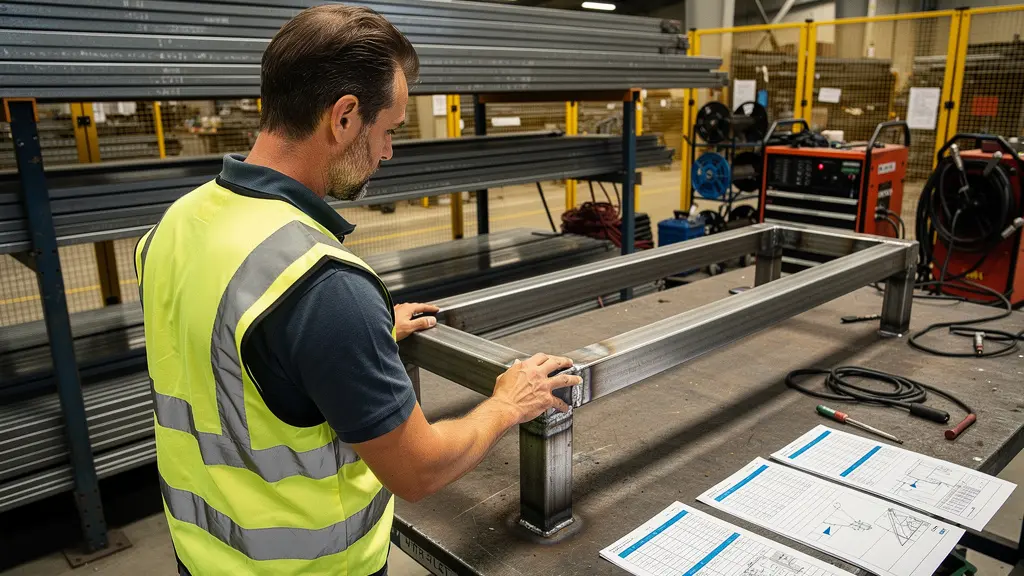
The BS EN 581 series from BSI establishes testing standards for outdoor furniture durability and mechanical safety. Professional manufacturers test to these standards and keep the certificates. Ask to see them. If a supplier hesitates, that tells you something.
On the ground, the reality is straightforward. Manufacturers invest in tooling, training, quality systems. That investment shows in product consistency. Resellers have lower overheads but also lower accountability. Neither model is inherently wrong, but you need to know which you are dealing with.
Beyond the Brochure: Testing Durability Claims
How do you know the quality is actually good? Every supplier claims durability. Every brochure shows gleaming products in pristine settings. The gap between marketing and reality can be expensive.
The projects I have reviewed show a pattern. Procurement teams often accept durability claims at face value. They see “heavy duty” or “commercial grade” and assume that means something. It frequently does not.
Professional suppliers, such as Procity UK, differentiate themselves through verifiable evidence. They can show testing reports. They can point you to installations from ten or fifteen years ago still performing well. They welcome site visits because they have nothing to hide.

Supplier evaluation questions to ask before shortlisting
-
Can you provide BS EN test certificates for this product range?
-
Where can I visit installations over 10 years old?
-
What galvanisation thickness do you specify for steel components?
-
Can you supply material traceability documentation?
-
What is your powder coating specification and warranty?
Galvanisation matters enormously for steel products. Hot-dip galvanisation to BS EN ISO 1461 with minimum 85 microns provides genuine corrosion protection. Some suppliers use thinner coatings or electro-galvanising that looks similar initially but fails faster in exposed locations. Ask for the specification in writing.
Timber sourcing separates professionals too. FSC or PEFC certification indicates responsible sourcing, but also correlates with quality. Certified timber comes with documentation. Uncertified hardwood from unknown sources often means inconsistent grades and unpredictable weathering.
The ESPO framework 615_25 provides a compliant procurement route where suppliers have already been assessed for financial stability, track record, and experience. Framework agreements do some due diligence for you, though you should still verify specifics for your project.
Service Depth: What Happens After the Invoice
I accompanied a facilities manager in Leeds last spring. She was trying to source replacement slats for benches installed eight years earlier. The original supplier had stopped trading. The bench design was proprietary. Nobody could match the profile.
Her options? Replace entire benches. Or accept mismatched repairs. Both expensive. Both avoidable if someone had asked about spare parts policy at tender stage.
Professional suppliers commit to spare parts availability for defined periods, typically 15 to 25 years. They maintain tooling. They keep stocks. That commitment costs them money, which is partly why professional suppliers cost more upfront. But it transforms total cost of ownership.
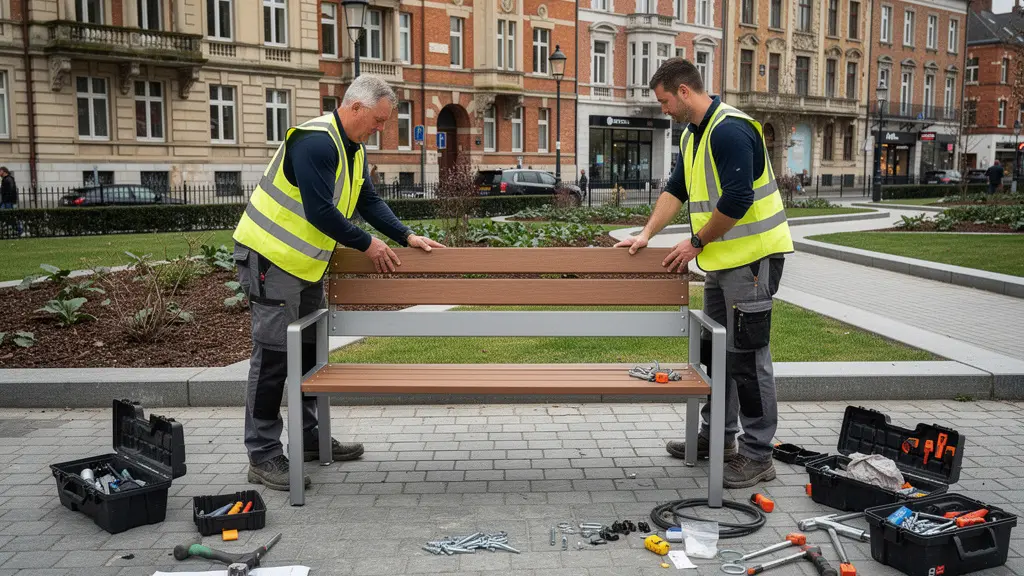
Watch for these aftercare red flags: Warranty terms that exclude “normal wear” without defining it. No named contact for warranty claims. Spare parts “subject to availability” without commitment period. Installation by unnamed subcontractors. No maintenance guidance documentation.
Warranty depth matters as much as duration. Ten years sounds good. But ten years on what? Professional suppliers typically offer structural warranties of 10 to 25 years on frames and fixings, with shorter but still substantial coverage on finish and moving parts. Budget suppliers may quote impressive headline figures that evaporate when you read the exclusions.
The most common oversight I encounter involves installation. Some suppliers deliver only. Others offer installation but subcontract it to whoever is cheapest that week. Professional suppliers either use employed teams or vetted contractors with proper training on their products.
Why does that matter? Because incorrect installation invalidates warranties, causes premature failures, and creates safety risks. A bench installed on inadequate foundations will rock loose. A shelter fixed to unsuitable substrates will fail. The installation team needs to understand not just general groundworks but the specific requirements of each product.
According to Crown Commercial Service guidance, focusing on lifecycle costs rather than just upfront costs is crucial for sustainable procurement. That principle applies directly here. A supplier who costs 20% more but delivers 25 years of reliable service represents better value than one who costs less but needs replacing in eight.
-
Initial supplier inquiry and requirements brief -
Detailed proposal with technical specifications received -
Site survey and customisation discussion completed -
Prototype approval for bespoke items -
Manufacturing and delivery
Your Questions About Evaluating Street Furniture Suppliers
How can I verify a supplier’s durability claims?
Request BS EN test certificates for the specific products you are considering. Ask for reference sites with installations over ten years old and visit them if possible. Check galvanisation specifications, powder coating thickness, and timber certification documentation. Genuine professionals provide this readily.
What warranty terms should I expect from professional suppliers?
Professional suppliers typically offer 10 to 25 years on structural components such as frames and fixings. Finishes usually carry 5 to 10 year coverage. Read exclusions carefully. “Normal wear” should be defined. Warranty should not require you to prove the defect was not caused by vandalism or misuse without reasonable evidence.
Is it worth paying more for a UK-based manufacturer?
UK manufacturing offers advantages in lead times, customisation flexibility, site visits, and long-term spare parts security. It also simplifies warranty enforcement. Whether the premium is justified depends on project complexity and your tolerance for risk. For high-visibility town centre schemes, I generally recommend prioritising UK manufacturing capability.
What aftercare services distinguish quality suppliers?
Look for guaranteed spare parts availability with defined timeframes, named account managers rather than generic helplines, maintenance guidance documentation, and willingness to support warranty claims without excessive burden of proof. Professional suppliers see aftercare as relationship-building, not cost centre.
How do I assess customisation capability?
Ask whether they manufacture in-house or adapt standard products. Request examples of bespoke projects. Check whether custom work affects warranty terms. Professional suppliers with their own production can modify dimensions, colours, and features. Resellers typically offer only catalogue variations.
Your next step before shortlisting
I always recommend starting with manufacturing transparency. Before comparing prices or catalogues, establish who actually makes the products and where. That single question filters out suppliers who cannot deliver long-term value.
The Midlands council I mentioned at the start has since retendered with a proper evaluation framework. They weighted aftercare commitments equally with upfront cost. Their shortlist looked very different the second time. Sometimes expensive lessons are the only ones that stick.
Key points for your supplier shortlist
-
Verify manufacturing location and quality control processes before comparing prices
-
Request BS EN test certificates and visit reference installations over 10 years old
-
Confirm spare parts commitment periods and warranty enforcement processes in writing
What question will you ask your current shortlist tomorrow that you were not planning to ask before?