Culture & Arts
Culture and arts represent humanity’s most profound attempts to make sense of existence, communicate complex emotions, and preserve collective memory across generations. From ancient cave paintings to contemporary digital installations, artistic expression has served as both mirror and window—reflecting our current realities while opening portations to new ways of thinking. For anyone seeking to enrich their life experience, understanding the cultural landscape offers intellectual stimulation, emotional resonance, and a deeper connection to the human story.
This exploration addresses the fundamental questions many people ask when approaching this vast domain: What are the primary forms of artistic expression? How do cultural institutions function? Why does engagement with the arts matter for individuals and communities? Whether you’re taking your first steps into museums or seeking to deepen an existing appreciation, this comprehensive overview provides the foundational knowledge to navigate the cultural world with confidence and curiosity.
What Makes Culture and Arts Essential to Human Experience?
The arts fulfill needs that extend far beyond entertainment or decoration. At their core, cultural expressions serve as repositories of collective wisdom, storing knowledge about who we are, where we’ve been, and what we value as societies. A Renaissance painting encodes information about historical fashion, social hierarchies, religious beliefs, and aesthetic preferences—becoming a multidimensional document that textbooks alone cannot convey.
Think of the arts as a universal language that transcends verbal communication barriers. A piece of music composed in Vienna can move a listener in Tokyo, despite neither sharing linguistic common ground. This emotional transmission operates on frequencies that bypass rational analysis, allowing direct heart-to-heart communication across centuries and continents. Research consistently demonstrates that engagement with creative works activates multiple brain regions simultaneously, strengthening neural pathways associated with empathy, problem-solving, and emotional regulation.
Beyond individual benefits, cultural participation builds social cohesion. Community theaters, local galleries, and public art installations create shared experiences that bind diverse populations together. When neighbors attend the same exhibition or performance, they develop common reference points that facilitate dialogue and mutual understanding—particularly valuable in increasingly fragmented societies.
The Major Forms of Artistic Expression
The artistic landscape encompasses numerous disciplines, each with distinct characteristics, techniques, and historical trajectories. Understanding these primary categories helps newcomers identify their interests and appreciate the specialized skills each form requires.
Visual Arts
Visual arts communicate through sight, utilizing elements like color, line, texture, and composition. This broad category includes painting, sculpture, photography, printmaking, and drawing. A portrait painter manipulates pigments and brushstrokes to capture not just physical likeness but psychological depth, while a sculptor transforms raw materials—marble, bronze, clay—into three-dimensional forms that occupy and transform space. Contemporary visual artists increasingly work across media, combining traditional techniques with unconventional materials like recycled objects, light projections, or organic matter.
Performing Arts
Performing arts unfold in real-time, creating ephemeral experiences that exist only in the moment of presentation. This category encompasses:
- Theater: actors embody characters through dialogue, movement, and stagecraft
- Dance: choreographed movement expressing narratives, emotions, or abstract concepts
- Music: organized sound exploring rhythm, melody, harmony, and timbre
- Opera: synthesis combining vocal performance, orchestral music, and theatrical production
The transitory nature of performance creates unique intensity—audiences and performers co-create meaning together in shared physical space, making each presentation subtly different from every other, even within the same production.
Literary Arts
Literature harnesses the written word to construct worlds, arguments, and experiences within readers’ imaginations. Poetry compresses language to its most potent essence, where every word carries maximum weight. Novels offer expansive narratives that can span generations and geographies, allowing readers to inhabit perspectives radically different from their own. Creative nonfiction blends factual reporting with literary techniques, transforming real events into compelling narratives. The literary arts demand active participation—unlike passive media consumption, reading requires sustained attention and imaginative collaboration between author and audience.
Digital and Contemporary Art Forms
Technology has expanded artistic possibilities exponentially. Digital artists create works that exist purely as code, projected light, or interactive experiences. Video art appropriates cinematic techniques for gallery contexts. Installation art transforms entire spaces into immersive environments. Performance art challenges traditional boundaries between artist, artwork, and audience. These contemporary forms often deliberately provoke questions about what constitutes art, pushing viewers to reconsider their assumptions and expand their definitions.
How Do Cultural Institutions Shape Our Understanding?
Cultural institutions serve as gatekeepers, educators, and preservers of artistic heritage. Understanding their roles helps you navigate these spaces more effectively and appreciate the complex work happening behind the scenes.
Museums and Galleries
Museums function as educational institutions that collect, preserve, research, and display objects of artistic, cultural, or scientific significance. Major encyclopedic museums house collections spanning multiple cultures and historical periods, offering visitors opportunities to trace artistic development across millennia within a single afternoon. Specialized museums focus deeply on particular subjects—a single artist’s work, a specific medium, or a cultural tradition.
Commercial galleries operate differently, representing living artists and facilitating sales to collectors. While museums emphasize public education, galleries balance aesthetic presentation with market considerations. Both play crucial roles in the cultural ecosystem: galleries provide financial support enabling artists to continue working, while museums contextualize that work within broader historical narratives.
Theaters and Performance Spaces
Performance venues range from grand opera houses with ornate architecture to intimate black box theaters with flexible configurations. The physical design profoundly affects the audience experience—a Broadway theater creates different dynamics than a community playhouse. Concert halls are engineered with sophisticated acoustics, where ceiling angles and wall materials are precisely calculated to optimize sound distribution. Understanding these spatial considerations enhances appreciation for why certain works succeed better in specific environments.
Libraries and Archives
Beyond lending books, modern libraries function as democratic cultural centers offering free access to information, programming, and community space. Archives preserve fragile historical materials—manuscripts, letters, photographs, recordings—making primary sources available to researchers and curious citizens. These institutions safeguard cultural memory, ensuring that voices from the past remain accessible to future generations.
Building Your Personal Connection with the Arts
Developing genuine engagement with culture requires moving beyond passive consumption toward active participation and critical thinking. This process unfolds gradually, building confidence through repeated exposure and reflection.
Starting as a Beginner
New audiences often feel intimidated by perceived knowledge gaps or unwritten rules. The most effective approach involves following genuine curiosity rather than forcing interest in what you think you should appreciate. If Renaissance paintings leave you cold but contemporary photography captivates you, trust that instinct. Artistic taste develops through exposure—visit museums regularly, attend performances, read widely, and notice what resonates emotionally.
Many institutions offer resources designed specifically for beginners: guided tours, educational programs, artist talks, and explanatory materials. Take advantage of these tools without embarrassment. Even experienced art lovers use wall texts and audio guides to deepen understanding. Consider starting a cultural journal, noting your reactions, questions, and observations. Over time, patterns emerge revealing your evolving preferences and growing sophistication.
Developing Critical Appreciation
Moving from “I like it” or “I don’t like it” toward nuanced understanding involves asking deeper questions. Instead of seeking immediate judgments, approach works with curiosity:
- What is the artist attempting to communicate or achieve?
- What techniques, materials, or strategies are being employed?
- How does this work relate to its historical or cultural context?
- What emotional or intellectual response does it provoke in you, and why?
This analytical framework doesn’t replace emotional response—rather, it enriches gut reactions with contextual understanding. You might still dislike a celebrated work after analysis, but you’ll understand why it matters within its field while articulating specific reasons for your personal preference.
The Social Impact of Cultural Participation
Engaging with arts and culture extends benefits beyond individual enrichment, contributing to community wellbeing and social cohesion. Studies tracking populations over decades reveal that people who regularly participate in cultural activities report higher life satisfaction, stronger social networks, and better mental health outcomes compared to those with minimal cultural engagement.
Cultural participation takes many forms—not just attending elite institutions, but also community choruses, amateur theater groups, book clubs, and local craft circles. These grassroots activities provide creative outlets while building social capital. A neighborhood mural project brings together diverse residents around shared creation. Community theaters offer intergenerational interaction increasingly rare in age-segregated societies.
Arts education particularly benefits young people, developing skills applicable far beyond creative fields. Learning an instrument teaches discipline, delayed gratification, and attention to detail. Theater builds confidence, empathy, and collaborative abilities. Visual arts strengthen observational skills and creative problem-solving. These capacities transfer directly to academic achievement and professional success, regardless of eventual career path.
Cities and regions with vibrant cultural scenes demonstrate measurable economic benefits through tourism, job creation, and neighborhood revitalization. More subtly but perhaps more importantly, they attract and retain educated workers who prioritize quality of life and intellectual stimulation. The cultural infrastructure signals that a community values creativity, education, and human flourishing beyond mere economic productivity.
Your journey through culture and arts is deeply personal, shaped by individual experiences, backgrounds, and inclinations. There’s no single correct path or mandatory checklist of masterpieces to consume. The goal isn’t comprehensive knowledge—an impossible standard given culture’s vastness—but rather developing the confidence to explore independently, the skills to engage critically, and the openness to be moved, challenged, and transformed by human creativity across its infinite expressions.
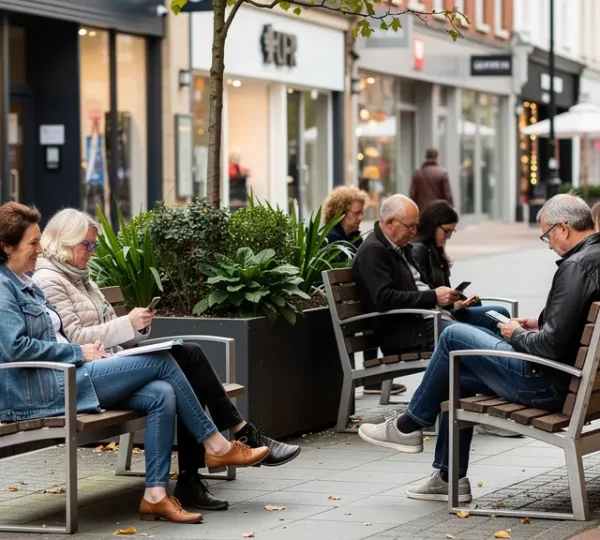
Improve Quality of Life with High-Quality Street Furniture
Last month, I sat on a bench in Sheffield that wobbled so badly I nearly spilled my coffee. Installed three years ago. Already failing. Across the road, a wooden seat from the 1990s looked better than ever. Same council. Same…
Read more
How Art Challenges Societal Norms in Authoritarian Regimes?
Contrary to the belief that censorship silences artists, this analysis reveals it as a paradoxical catalyst that forces dissent into more resilient and sophisticated forms. Suppression attempts often backfire, massively amplifying an artwork’s reach through psychological reactance (the Streisand Effect)….
Read more
NFTs: Solving the Royalties Problem for Digital Artists?
For decades, digital artists have faced a frustrating reality: their work is infinitely reproducible, often shared without credit, and rarely generates income beyond the initial sale. An artwork could be sold for a modest sum only to be resold later…
Read more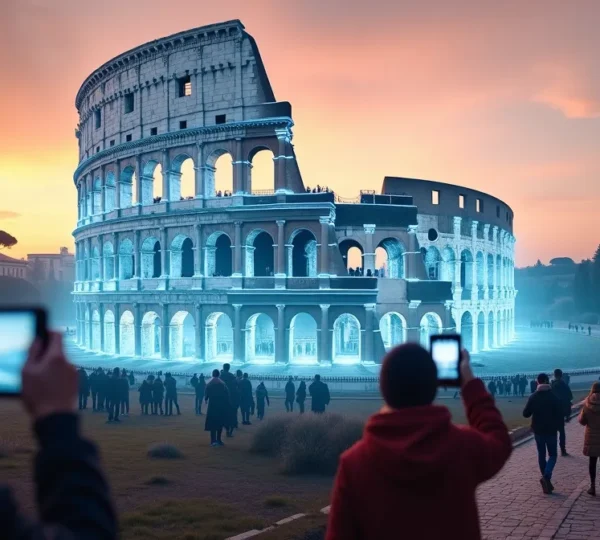
Reconstructing Ancient Monuments: Boosting Tourism in Heritage Sites?
Digital reconstruction offers a powerful, measurable ROI for heritage sites that goes far beyond simple visual appeal. It demonstrably increases visitor dwell time by providing crucial narrative context to otherwise unimpressive ruins. Modern WebAR technology enables the creation of low-cost,…
Read more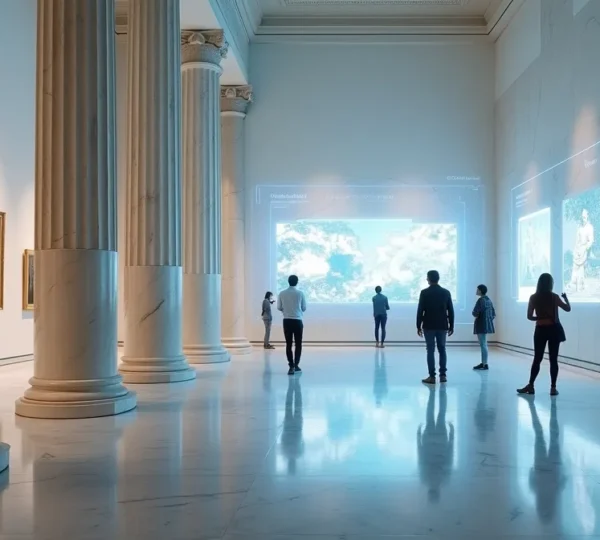
Digital Art Exhibitions: Democratizing Access to Museums Globally?
Beyond just making art accessible, digital exhibitions fundamentally transform viewers from passive observers into active analysts. Gigapixel scans reveal details and techniques invisible to the naked eye in a gallery. Personal curation tools empower you to build unique narratives and…
Read more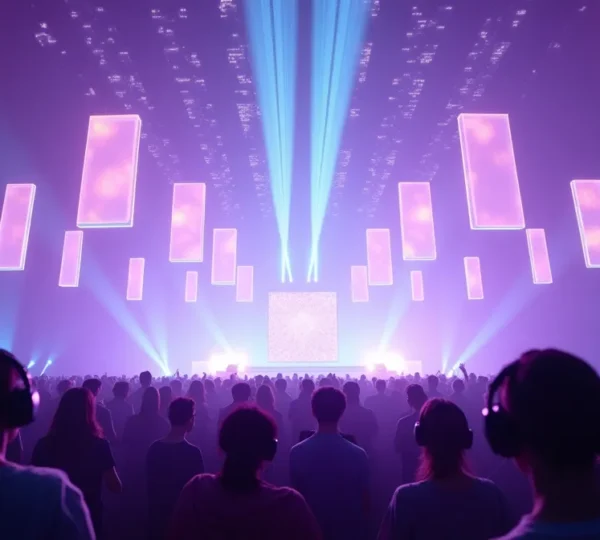
VR Concerts: Beyond Replication, A New Reality for Live Music
The goal of VR concerts isn’t to perfectly replicate a physical show, but to engineer entirely new sensory experiences that are impossible in real life. True immersion is built on “presence architecture,” where spatial audio and haptics create a psychological…
Read more
Do Ethical Values Actually Drive Customer Loyalty for Gen Z Brands?
Gen Z’s loyalty to ethical brands is not a blank check; it’s a calculated investment of trust with a clear expiration date, contingent on forensic-level proof that a brand’s actions match its words. The “say-do gap”—the space between marketing claims…
Read more
Why Cultural Awareness Fails Without Localized Conflict Resolution Protocols
The success of a global team hinges not on mere cultural awareness, but on the implementation of deliberate, localized conflict resolution protocols. Generic, one-size-fits-all HR policies often amplify, rather than resolve, cross-cultural friction. Understanding frameworks like “Face, Dignity, and Honor”…
Read more